Complete guide to switch from Texas hold'em to Omaha PLO
Master Omaha PLO basics and rules. Learn key differences from Texas hold'em, starting hands, betting strategies for beginners switching to PLO.
Complete Guide to Switch from Texas Hold'em to Omaha PLO
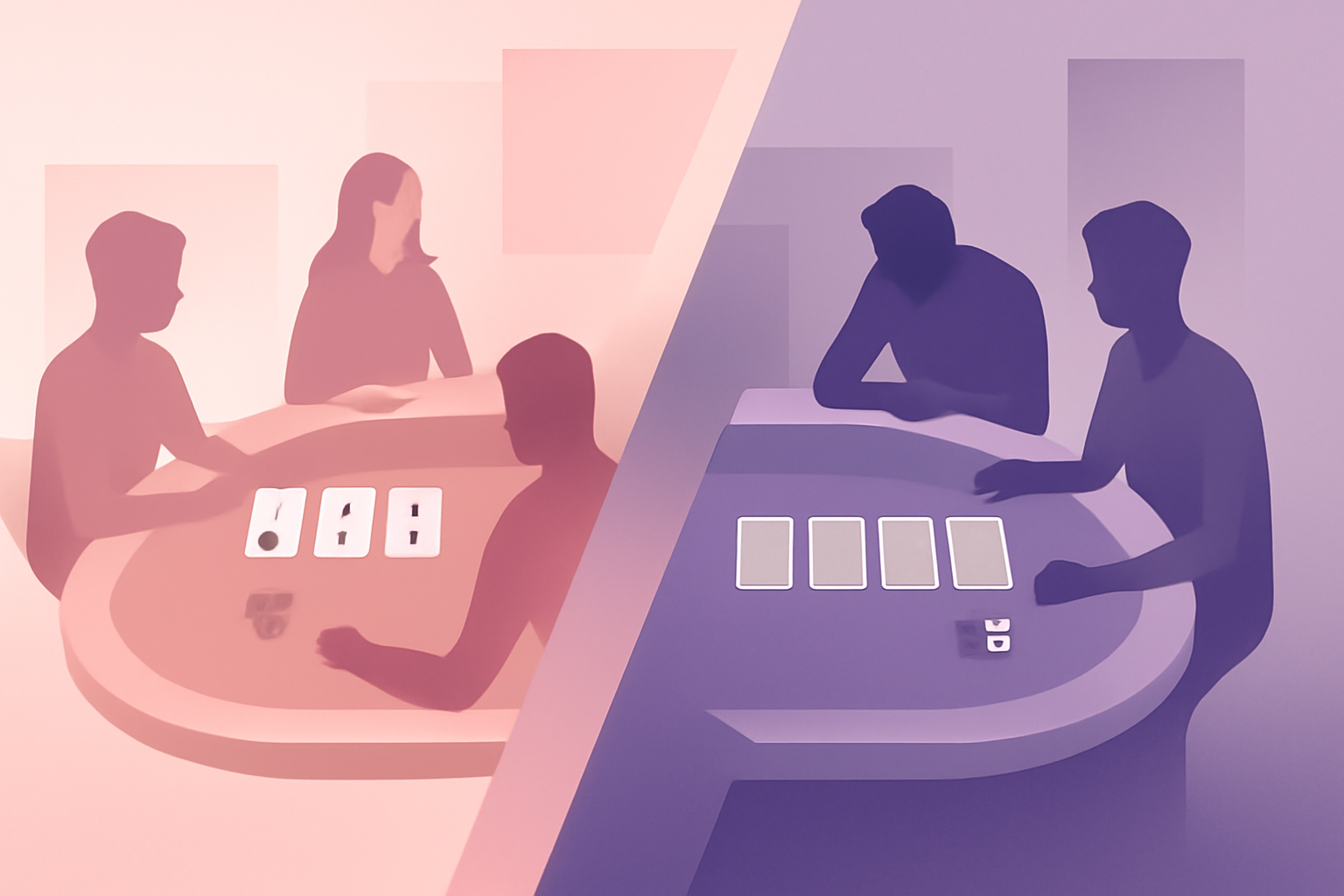
Making the jump from Texas Hold'em to Omaha PLO (Pot Limit Omaha) can feel overwhelming at first, but it's one of the most rewarding transitions in poker. While Hold'em gives you two cards to work with, Omaha deals you four cards, creating exponentially more possibilities and action. The increased complexity means bigger pots, more drawing opportunities, and a completely different strategic approach. If you're ready to evolve your poker game and tackle one of the most exciting variants available, this guide will walk you through everything you need to know to make a successful transition.
Understanding the fundamental differences
The most crucial difference between Texas Hold'em and Omaha PLO lies in the hand construction rules. In Hold'em, you can use zero, one, or both of your hole cards to make your best five-card hand. In Omaha, you must use exactly two cards from your four hole cards and exactly three cards from the board.
This rule fundamentally changes hand evaluation. For example, if you hold A♠ K♠ Q♠ J♠ and the board comes A♥ K♥ Q♥ 5♣ 2♦, you don't have a flush despite holding four spades. You can only use two of your cards, so your best hand is two pair (aces and kings) using A♠ K♠ from your hand and A♥ K♥ Q♥ from the board.
Pot Limit Omaha also restricts betting to the current pot size, unlike No Limit Hold'em where you can bet your entire stack at any time. If the pot contains $100, the maximum bet is $100. This creates a different dynamic where you can't simply shove all-in to end a hand early.
Starting hand selection strategy
Omaha starting hands are dramatically different from Hold'em premium hands. Pocket aces in Hold'em are nearly unbeatable pre-flop, but bare aces in Omaha (like A♠ A♥ 7♣ 2♦) are much weaker because they lack coordination with other cards.
The best Omaha starting hands have multiple ways to win. Premium hands include:
A♠ A♥ K♠ K♥: Double-suited high pairs with nut flush potential A♠ K♠ Q♥ J♥: Double-suited Broadway cards with straight and flush possibilities K♠ Q♠ J♥ T♥: Connected double-suited cards with massive drawing potential
Avoid hands with gaps and low cards that don't coordinate well. A hand like A♠ K♣ 8♦ 3♥ has potential but lacks the multi-way coordination that makes Omaha hands profitable.
Position becomes even more critical in Omaha because you'll frequently be drawing and need to control pot size. Play tighter from early position and expand your range in late position where you can see action before making decisions.
Pot odds and drawing in Omaha PLO
Omaha is fundamentally a drawing game. You'll rarely flop a made hand that doesn't need improvement, and understanding pot odds becomes essential for profitable play.
Consider this example: You hold A♠ K♠ Q♥ J♥ and the flop comes 10♠ 9♠ 8♥. You have: Nut straight draw (any jack or seven) Nut flush draw (any spade) Wrap straight draw (queen and jack also give straights)
That's potentially 20+ outs twice, giving you enormous equity against most hands. With this many outs, you can call large bets and even bet for value yourself.
Implied odds are massive in Omaha because when you hit your draw, opponents often can't fold their strong-but-second-best hands. If you're drawing to the nut flush and hit, someone with a smaller flush will likely pay you off significantly.
However, be cautious about drawing to non-nut hands. Drawing to the second-best flush or a low straight can be expensive when you hit but lose to better hands. Always consider what hands you're drawing to and whether they'll be best when you make them.
Position and betting strategy
Position is amplified in importance in Omaha PLO because you'll be in drawing situations constantly. Being able to see your opponents act first gives you crucial information about whether to continue with your draws or fold weaker hands.
The pot limit betting structure creates unique strategic considerations. You can't bet more than the pot, which means:
Building pots gradually: Unlike No Limit Hold'em where you can quickly build large pots, PLO requires more betting rounds to create significant pot sizes Pot control: Sometimes checking strong hands to keep pots manageable when you're not sure if you're ahead Bet sizing for value: Betting the full pot when you have strong hands or strong draws to maximize value
Bluffing frequency decreases significantly in Omaha because opponents will have so many draws and possibilities that they'll call more liberally. Focus on betting for value with strong hands and strong draws rather than trying to bluff opponents off marginal holdings.
When you do bluff, target situations where the board heavily favors your perceived range or when opponents show significant weakness. Board textures that coordinate with your positional range make for better bluffing opportunities.
Common mistakes to avoid when transitioning
Overvaluing top pair is the biggest mistake Hold'em players make in Omaha. Top pair in Omaha is rarely a strong hand, especially on coordinated boards. If you hold A♠ A♥ 7♣ 2♦ and the flop comes A♦ K♠ Q♥, your top set is vulnerable to numerous straight and flush draws that opponents are likely to have.
Playing too many hands is another common error. While Omaha starting hands look more exciting with four cards, discipline in hand selection remains crucial. Just because you have four cards doesn't mean you should play more hands than in Hold'em.
Misreading hands happens frequently when transitioning. Always double-check that you're using exactly two cards from your hand and three from the board. Practice hand reading regularly to avoid expensive mistakes.
Ignoring blockers costs money in Omaha. If you hold the A♠ and the board has three spades, opponents are less likely to have the nut flush. Use blocker information to make better decisions about betting, calling, and folding.
Don't chase non-nut draws in large pots. Drawing to the second-best possible hand often leads to expensive losses when you make your draw but lose to something better.
Making the transition successfully
Start your Omaha journey at micro stakes even if you're a winning mid-stakes Hold'em player. The transition requires time to adjust to new concepts, and protecting your bankroll while learning is essential.
Consider investing in specialized poker training that focuses on PLO fundamentals. The strategic concepts differ enough from Hold'em that dedicated study accelerates your learning curve significantly.
Practice hand reading extensively using poker software or online training tools. The ability to quickly assess your hand strength and opponents' likely holdings is crucial for Omaha success.
Focus on fundamental concepts first: proper starting hand selection, understanding equity and pot odds, and recognizing when you have strong draws versus weak draws. Advanced concepts like range balancing can wait until you've mastered the basics.
Remember that variance is higher in Omaha, so ensure your bankroll can handle the swings. Even expert players experience significant downswings due to the high-equity nature of most Omaha confrontations.
The transition from Hold'em to Omaha PLO opens up a world of complex, action-packed poker that rewards deep thinking and strong fundamentals. While the learning curve is steep, the increased action and strategic depth make Omaha one of the most engaging poker variants available. Take your time, study diligently, and prepare for an exciting new chapter in your poker journey.
Ready to improve your game?
Explore our free training courses and interactive tools to level up your poker skills.
Explore free courses →