
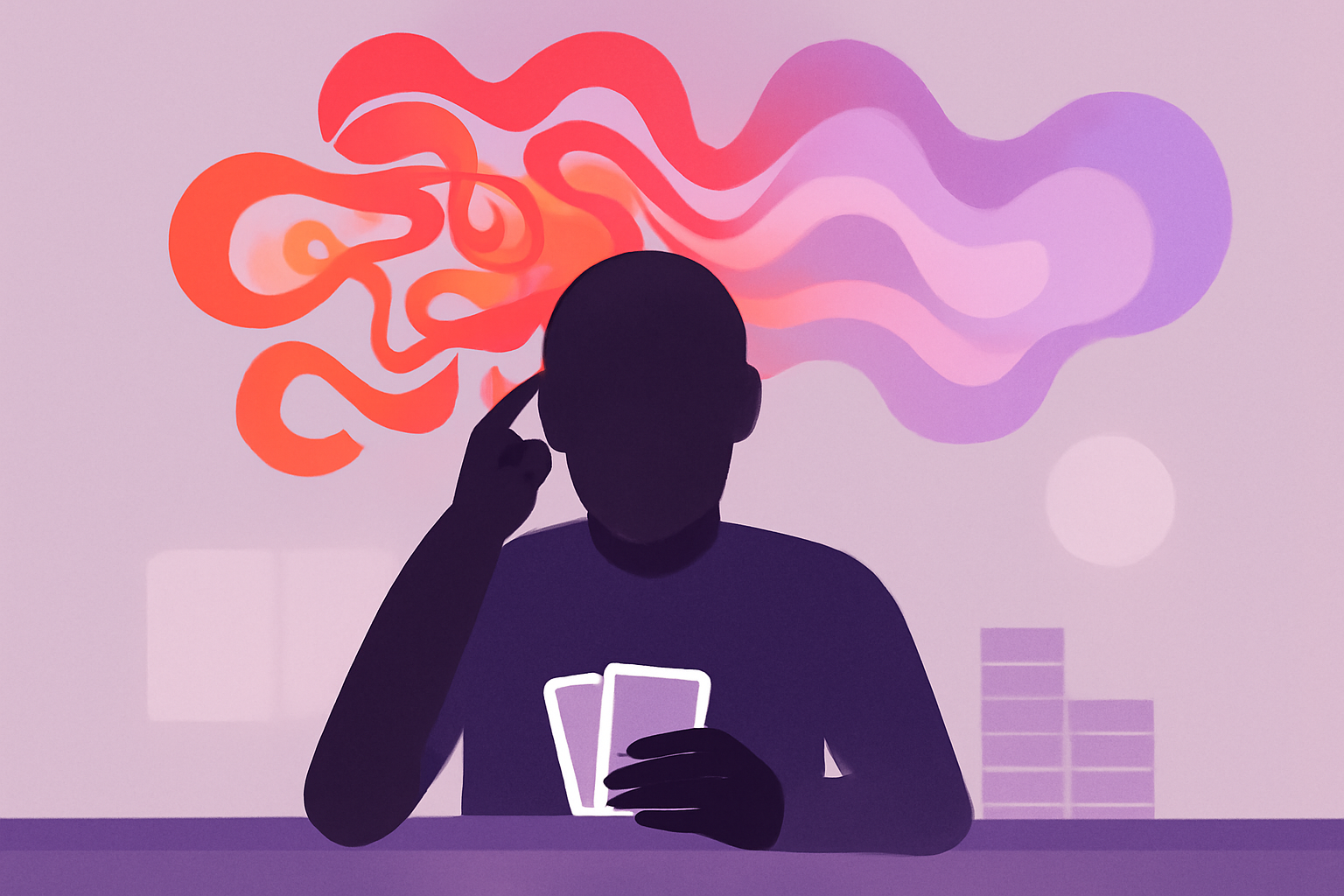
Poker tilt: master your emotions to protect your bankroll
Learn to control tilt and manage emotions at the poker table. Discover proven strategies to protect your bankroll and improve your mental game.
Poker Tilt: Master Your Emotions to Protect Your Bankroll
Picture this: You've been playing solid poker for hours, steadily building your stack, when suddenly you take a brutal bad beat. Your pocket aces get cracked by a runner-runner flush, and you watch $500 disappear in an instant. Your heart races, your face flushes, and before you know it, you're calling all-ins with marginal hands and bleeding chips at an alarming rate. Welcome to tilt – poker's silent bankroll killer that has destroyed more promising careers than any strategic mistake ever could.
Understanding tilt and why it happens
Tilt is the poker term for a state of emotional frustration that leads to suboptimal decision-making at the tables. When you're on tilt, logic takes a backseat to emotion, and your normally sound strategy crumbles under the weight of anger, frustration, or desperation.
Tilt typically occurs after experiencing: Bad beats where your strong hand loses to an unlikely draw Coolers involving unavoidable confrontations between premium hands Extended losing streaks that challenge your confidence Time pressure when you're stuck and running out of playing time Life stress that carries over from outside the poker room
The psychological mechanism behind tilt is rooted in our fight-or-flight response. When we perceive a threat to our bankroll or ego, our brain releases stress hormones that impair rational thinking. This evolutionary response that once helped humans survive predators now sabotages our ability to make calculated poker decisions.
Consider this example: You raise with A♠K♠ from middle position and get called by the button. The flop comes A♣K♦3♥, giving you top two pair. You bet, get raised, and decide to call. The turn brings the 7♠, you check-call another bet. The river is the 4♠, and when your opponent moves all-in, you reluctantly call with your two pair – only to see them flip over 5♥6♥ for the unlikely straight. This type of scenario can trigger immediate tilt if you don't have proper emotional control.
Recognizing the warning signs of tilt
Learning to identify tilt before it spirals out of control is crucial for protecting your bankroll. Mental game awareness starts with recognizing these common warning signs:
Physical symptoms
Increased heart rate or sweating Tense muscles, especially in shoulders and jaw Fidgeting with chips or cards more aggressively Changes in breathing patterns
Behavioral changes
Calling more frequently with marginal hands Raising with weaker holdings out of frustration Playing more tables or higher stakes to "get even quickly" Ignoring position and pot odds calculations Taking longer to make decisions or acting impulsively
Mental warning flags
Focusing on results rather than decision quality Blaming luck, dealers, or other players for losses Feeling like you "deserve" to win the next hand Obsessing over specific bad beats or losses
The key is developing self-awareness to catch these symptoms early. Many successful players keep a tilt journal where they record situations that triggered emotional responses, helping them identify patterns and personal triggers over time.
Proven strategies to prevent and manage tilt
Pre-session preparation
Start each poker session with the right mindset by establishing clear goals and limits. Set both win goals and loss limits before you sit down, and commit to honoring them regardless of how you feel in the moment. Many professionals recommend a stop-loss of 3-5 buy-ins for cash games and having a predetermined tournament schedule.
Create a pre-game routine that puts you in the optimal mental state. This might include reviewing hand histories, doing breathing exercises, or visualizing successful play. Just like athletes prepare mentally before competition, poker players benefit from consistent preparation rituals.
In-the-moment techniques
When you feel tilt creeping in, employ these immediate damage control strategies:
Take a break: Step away from the table for 5-10 minutes. Use this time to walk around, get fresh air, or practice deep breathing exercises. Physical movement helps reset your mental state and provides perspective on the situation.
Use the STOP technique: Stop what you're doing Take a deep breath Observe your emotional state objectively Proceed with conscious intention rather than emotional reaction
Reframe your perspective: Instead of thinking "I can't believe that fish got lucky again," try "That player made a mistake with poor odds – I want them to keep making those plays in the long run."
Bankroll management as tilt protection
Proper bankroll management serves as your first line of defense against tilt. When you're playing with scared money or at stakes that make you uncomfortable, you're more susceptible to emotional decision-making. Follow conservative bankroll guidelines – typically 20-30 buy-ins for cash games and 100+ tournaments for your chosen format.
The long-term benefits of emotional control
Mastering tilt control extends far beyond protecting your immediate bankroll. Players who develop strong emotional regulation skills enjoy several long-term advantages:
Improved decision-making consistency: When emotions don't cloud your judgment, you can execute your strategy more reliably across all sessions. This consistency is what separates winning players from break-even competitors over large sample sizes.
Better game selection: Emotionally controlled players make more rational decisions about which games to play, when to play them, and when to quit. They're less likely to chase losses in bad games or play when they're not at their best.
Enhanced learning: Tilt-free players can objectively analyze their play and learn from mistakes without the emotional baggage that prevents growth. They view losses as learning opportunities rather than personal attacks on their skills.
Professional longevity: The mental skills developed through tilt management translate to better stress management in all areas of life. Many successful poker professionals credit their emotional control skills with helping them in business and personal relationships.
Consider investing in your mental game through dedicated training resources. Professional coaching and structured learning programs can accelerate your development of these crucial skills. You can explore comprehensive training options at poker-builder.com to systematically improve both your technical and mental game skills.
Take action to protect your bankroll today
Tilt control isn't just about damage limitation – it's about unlocking your true poker potential. Start implementing these strategies immediately: set clear session limits before your next poker session, practice the STOP technique during low-pressure situations, and begin keeping a simple tilt journal to identify your personal triggers.
Remember, even world-class players experience tilt occasionally. The difference between winners and losers isn't the absence of tilt, but how quickly they recognize and recover from it. By developing strong emotional control and maintaining disciplined bankroll management, you'll not only protect your money but also position yourself for long-term poker success.
Your bankroll depends on more than just technical skill – master your emotions, and watch your results improve dramatically.
Ready to improve your game?
Explore our free training courses and interactive tools to level up your poker skills.
Explore free courses →