
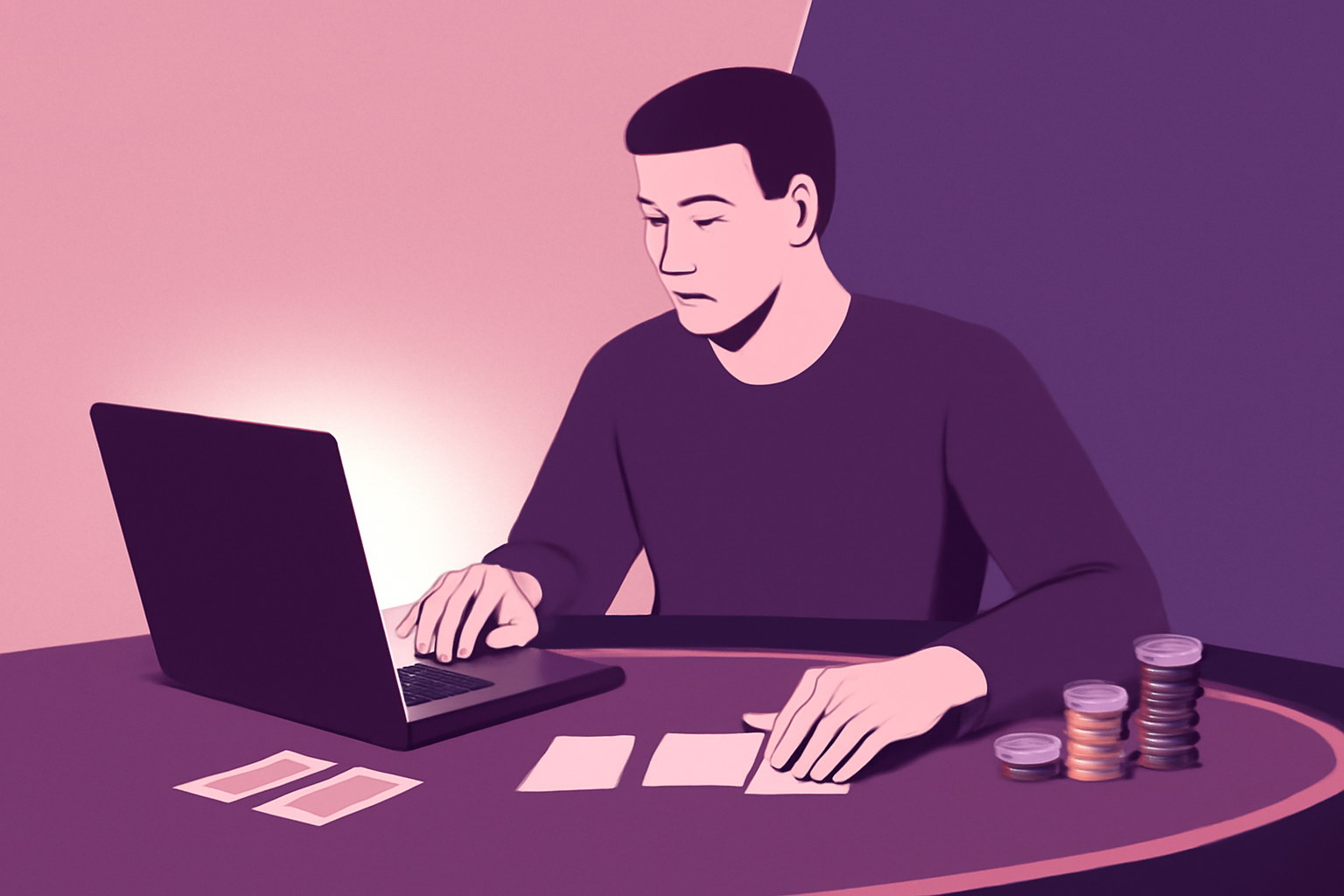
Poker live en casino : s'adapter quand on vient du online
Vous venez du poker online et découvrez le live en casino ? Découvrez comment adapter votre jeu et éviter les pièges classiques.
You've been grinding online for months, you know your hand ranges, you understand pot odds, and you feel ready to take on a real casino poker room. Then you sit down at your first live table and everything feels… different. The pace is slower, people are staring at you, and someone just announced a bet without even touching their chips. If this sounds familiar, you're not alone. The gap between online poker and live casino poker is wider than most players expect — but it's absolutely bridgeable with the right preparation.
The core differences between online and live poker
Before you can adapt, you need to understand exactly what has changed.
Speed and volume
Online, you might play 60–100 hands per hour on a single table. At a live casino table, expect around 25–35 hands per hour. That's not a flaw — it's simply the reality of physical cards, chip handling, and human dealers. The immediate consequence: your hourly variance drops, but individual decisions carry more weight because you play fewer of them. A mistake online is diluted across hundreds of hands. Live, every hand counts more.
Bet sizing norms
Online games, especially at lower stakes, often feature very small bet sizes — think 25% to 33% pot. Live poker tends to reward larger bet sizing. Players call more loosely because they're bored, because they want to "see what you have," or simply because they've traveled to the casino and want action. Adjusting your value bets upward — often to 60–80% of the pot or even larger — is frequently the right adaptation.
The absence of a HUD
Online, many players rely on tracking software and HUDs (Heads-Up Displays) to show statistics on opponents. Live poker strips all of that away. You are back to reading timing, bet sizing patterns, physical tells, and table talk. This can feel disorienting at first, but it also levels the playing field in your favor if you develop good observation habits.
Reading the table: physical tells and live reads
This is where live poker becomes genuinely fascinating. Physical tells aren't magic — they're patterns of behavior that give you additional information on top of the standard betting-line analysis you already do online.
A few reliable patterns to watch for:
- Shaking hands when betting: Often indicates excitement and a strong hand, not nerves about bluffing.
- Staring you down: Counterintuitively, a player who stares hard at you after betting is frequently bluffing and trying to intimidate. Strong hands tend to look away.
- Hesitation before a check: If a player pauses significantly before checking the flop, they may be debating whether to bet — suggesting they have *something* but not a monster.
That said, never over-rely on tells. A solid read on betting patterns — how much did they raise preflop, did they c-bet this texture, how large was the river bet — should always be your primary tool. Tells are bonus information, not a substitute for thinking through the hand.
Adjusting your strategy for live players
The typical live poker player pool at low and mid-stakes casino games has specific tendencies that differ significantly from online regulars.
They call too much
This is the defining leak of most recreational live players. They call preflop with a wide range, they call flops with weak pairs and draws, and they call rivers because they've invested money and are curious. Your adjustment: tighten your bluffing frequency and increase your value bet sizing. If you're value betting thinly online with second pair, do it even more confidently live. Don't bluff the station who has called three streets with middle pair — instead, find hands where you can extract three streets of value.
They telegraph their intentions
Live players often announce weakness before acting. A long sigh before checking, grabbing chips before it's their turn (almost always means they plan to call or raise), or checking their hole cards again on a suited board — these are all informational leaks you can exploit.
A concrete example
You open to 3x from the cutoff with A♠ Q♦. The big blind — a passive older gentleman who has called several raises already — calls. The flop comes A♥ 7♣ 3♦. He checks, you bet 60% pot, he calls. Turn is K♠, he checks again. Online, you might check back a second-best kicker hand. Live? Bet again, perhaps 55–65% pot. He likely has Ax with a weaker kicker, maybe A5 or A9, and he's not folding. River brings J♦, he checks. This is a clear value bet. Size up to 70–75% pot. Live players rarely fold a piece of the board by the river.
Casino etiquette and practical logistics
Knowing how to *act* at a live table is as important as knowing how to *play*. Violating basic etiquette slows the game, creates awkward moments, and marks you as a novice — which can invite exploitation.
Key rules to internalize:
- Act in turn: Never fold, call, or raise before the action reaches you. Doing so gives free information to other players.
- Announce your action: Especially for raises. Say "raise" before moving chips to avoid confusion about whether you're calling or raising.
- String bets: You cannot make one forward chip motion, then go back to your stack for more. Put the full amount in one motion, or announce the raise amount first.
- Keep your cards visible: Don't cup your hole cards or lift them off the felt dramatically. A quick peek is standard.
- Tip the dealer: Live dealers work for tips. Tipping on winning pots is a basic courtesy at most casino tables worldwide.
Also remember: buy in for the maximum allowed. Online players sometimes buy in short as a tactical choice, but live, a full stack gives you maximum flexibility and credibility at the table.
Building the skills to make the transition successfully
The good news is that the fundamentals of strong poker — position, hand selection, understanding ranges, pot odds, bet sizing logic — transfer directly from online to live. What you're adding is an observational layer and an adjustment to table dynamics.
The most effective approach is to work on your core game consistently, then apply that foundation with live-specific adjustments. If you want structured guidance on both the theoretical side and practical application, our training section at poker-builder.com offers resources designed to help players at every stage of that journey.
Make your move to live poker count
Transitioning from online poker to live casino poker isn't about learning a new game — it's about translating your existing skills into a new environment. The key adjustments are simple to summarize: slow down, observe carefully, bet bigger for value, bluff less often, and respect the etiquette of the room. Give yourself three or four sessions before drawing conclusions about your results. The pace will feel natural faster than you expect, and the richness of live reads and table dynamics will likely make you a sharper, more complete player — both at the felt and back at your screen.
Ready to improve your game?
Explore our free training courses and interactive tools to level up your poker skills.
Explore free courses →