
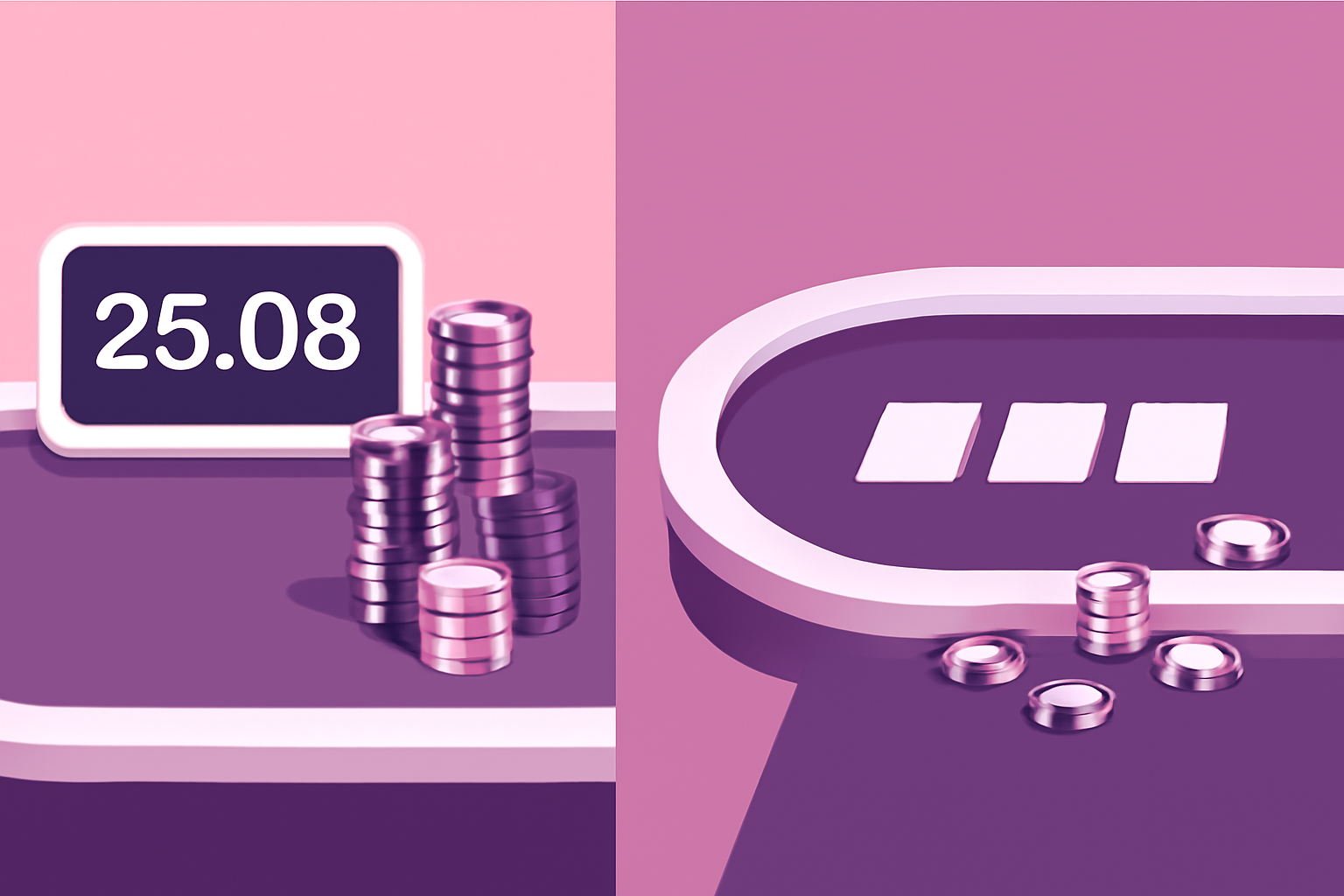
MTT vs cash game: which Poker format suits you in 2026?
MTT or cash game? Discover the key differences between these Poker formats and find which one matches your style and goals in 2026.
MTT vs cash game: which poker format suits you in 2026?
You sit down at a poker table, chips in front of you, and you're immediately faced with a choice that shapes everything: are you playing a multi-table tournament (MTT) or a cash game? For many beginners, this decision feels almost random — they jump into whatever is available. But the truth is, these two formats demand very different skills, mindsets, and bankrolls. Choosing the wrong one can drain your motivation before you ever find your stride. This guide breaks down the key differences so you can make an informed decision and start building your poker game on solid ground in 2026.
What are MTTs and cash games, exactly?
Before comparing the two, let's make sure we're speaking the same language.
A multi-table tournament (MTT) is a structured competition where every player pays a fixed buy-in (say, $10 or $100), receives a starting stack of chips, and plays until they've either busted or outlasted everyone else. Blinds increase on a timer, creating pressure and forcing action. The prize pool is distributed among the top finishers — usually the top 10–15% of the field — with the biggest payouts reserved for the final table.
A cash game (also called a ring game) works completely differently. The chips on the table represent real money directly. You can buy in for a fixed amount, leave whenever you want, and top up your stack between hands. Blinds stay fixed — a $1/$2 game is always $1/$2, whether you've been playing for five minutes or five hours.
The structural differences alone are enough to make each format feel like a different game.
How the bankroll requirements differ
One of the biggest practical differences between MTTs and cash games is variance — the natural swings in results caused by luck over the short term.
In a cash game, variance is relatively contained. A solid player at $1/$2 might experience rough sessions, but their results tend to stabilize over thousands of hands. A recommended bankroll for cash games is around 20–30 buy-ins. If your buy-in is $200, you'd want $4,000–$6,000 set aside for poker.
In MTTs, variance is brutal. Even the best tournament players in the world can go on losing streaks lasting months. Why? Because in a tournament, running deep (and getting paid) is rare by definition. Most players finish in the money only a fraction of the time. The standard recommendation is to have 50–100 buy-ins for your regular tournament stakes. If you play $10 MTTs regularly, you should have $500–$1,000 dedicated to your tournament bankroll.
Example: Imagine two players, Alex and Maria. Alex plays $1/$2 cash games with a $5,000 bankroll. After a bad month, he's down $800 — painful, but not catastrophic. Maria plays $10 MTTs with the same $5,000 and runs badly for two months straight. She could easily drop $1,500–$2,000 without doing anything wrong. Her bankroll handles it, but her mental game will be tested hard.
The skill sets each format demands
Both formats require core poker skills — hand reading, position awareness, understanding pot odds, and managing your mental game. But the emphasis shifts significantly between the two.
Skills that matter most in cash games
In cash games, post-flop play is king. Since blinds never increase, there's rarely pressure to shove or call off your stack preflop. Deep-stack poker rewards players who can extract maximum value on the flop, turn, and river. You need to think about stack-to-pot ratios (SPR), implied odds, and how to build pots with your strong hands while keeping them small with marginal ones.
Cash games also reward discipline and patience. You can fold for an hour, wait for a great spot, and then make your money back in one hand. There's no clock counting you down.
Skills that matter most in MTTs
Tournaments demand mastery of short-stack play and ICM (Independent Chip Model) — the concept that tournament chips have different values depending on the prize structure. A chip you lose is worth more than a chip you win, which means sometimes folding a hand you'd happily play in a cash game is the correct move.
MTTs also require blind-stealing, push/fold strategy, and understanding how to adjust your ranges based on stack depth. When you're down to 15 big blinds with the money bubble approaching, the math changes dramatically.
Example hand: You're in an MTT with 20 big blinds on the bubble. You're dealt A♠ 9♣ in the cutoff. In a cash game, this is a comfortable open-raise. In an MTT, depending on your opponents' stacks and the bubble dynamics, you might shove all-in or even fold if the risk to your tournament life outweighs the potential gain. That kind of nuanced thinking is what separates tournament players.
Lifestyle and time commitment: a real factor in 2026
Let's talk practicalities, because poker doesn't exist in a vacuum.
Cash games are flexible. You sit down, play a session, and leave. Whether you have two hours or eight, cash games accommodate your schedule. You profit — or lose — based on that session alone. This makes cash games ideal for players with unpredictable schedules or those who prefer clear, session-based results.
MTTs are time-consuming and unpredictable. A major online tournament might take 6–10 hours if you run deep. There's nothing more frustrating than busting a four-hour tournament in the middle of the night right before the money. On the flip side, that one deep run — the one that turns a $30 buy-in into a $3,000 payday — is the kind of rush that keeps tournament players coming back.
In 2026, the growth of fast-fold cash game formats and hyper-turbo MTTs means you have more options than ever to find something that fits your life. But understanding the base formats first gives you the foundation to navigate those variants smartly.
So which format should you choose?
Here's the honest answer: there's no universally superior format. The right choice depends on you.
Choose cash games if you: Prefer lower variance and more predictable results Have a limited or moderate bankroll Enjoy deep-stack, post-flop thinking Want flexibility in how long you play
Choose MTTs if you: Love the thrill of competition and working toward a big score Can handle long stretches without cashing Enjoy short-stack strategy and tournament dynamics Have the bankroll and patience for high variance
The most practical advice for beginners and intermediate players is to start with cash games. They teach you fundamental poker skills faster because you play more hands in fewer hours, and the feedback loop is tighter. Once your core game is solid, adding tournaments to your portfolio becomes much more rewarding.
Whatever format you choose, consistent study accelerates your results faster than table hours alone. If you want structured, format-specific coaching to sharpen your edge, explore the training tools available at poker-builder.com — designed to help you improve whether you're grinding cash or chasing tournament glory.
Pick your format, study hard, and play with intention. In 2026, the players who improve deliberately are the ones cashing consistently.
Ready to improve your game?
Explore our free training courses and interactive tools to level up your poker skills.
Explore free courses →