
Heads-up Expresso: strategy to win big multipliers
Master heads-up Expresso duels with proven strategies to hit massive multipliers and dominate this fast-paced poker format in 2026.
Heads-up Expresso: strategy to win big multipliers
Imagine sitting down at a poker table where the prize pool could explode to 1,000 times your buy-in before a single card is dealt. That's the electric reality of Expresso (also known as Spin & Go) poker — and when you strip it down to just two players, the heads-up duel becomes one of the most intense, skill-dependent formats in the game. Short stacks, random multipliers, and one opponent standing between you and a massive payday: this format rewards players who understand aggression, adaptation, and edge maximization. Whether you're new to the format or looking to sharpen your expresso heads-up duel strategie, this guide breaks down exactly what you need to win.
Understanding the heads-up Expresso format
Before diving into strategy, you need to understand the battlefield. A standard Expresso tournament starts with three players, but some platforms offer a dedicated heads-up (two-player) variant where the action begins immediately one-on-one. In both cases, once you reach the heads-up stage, the dynamics shift dramatically.
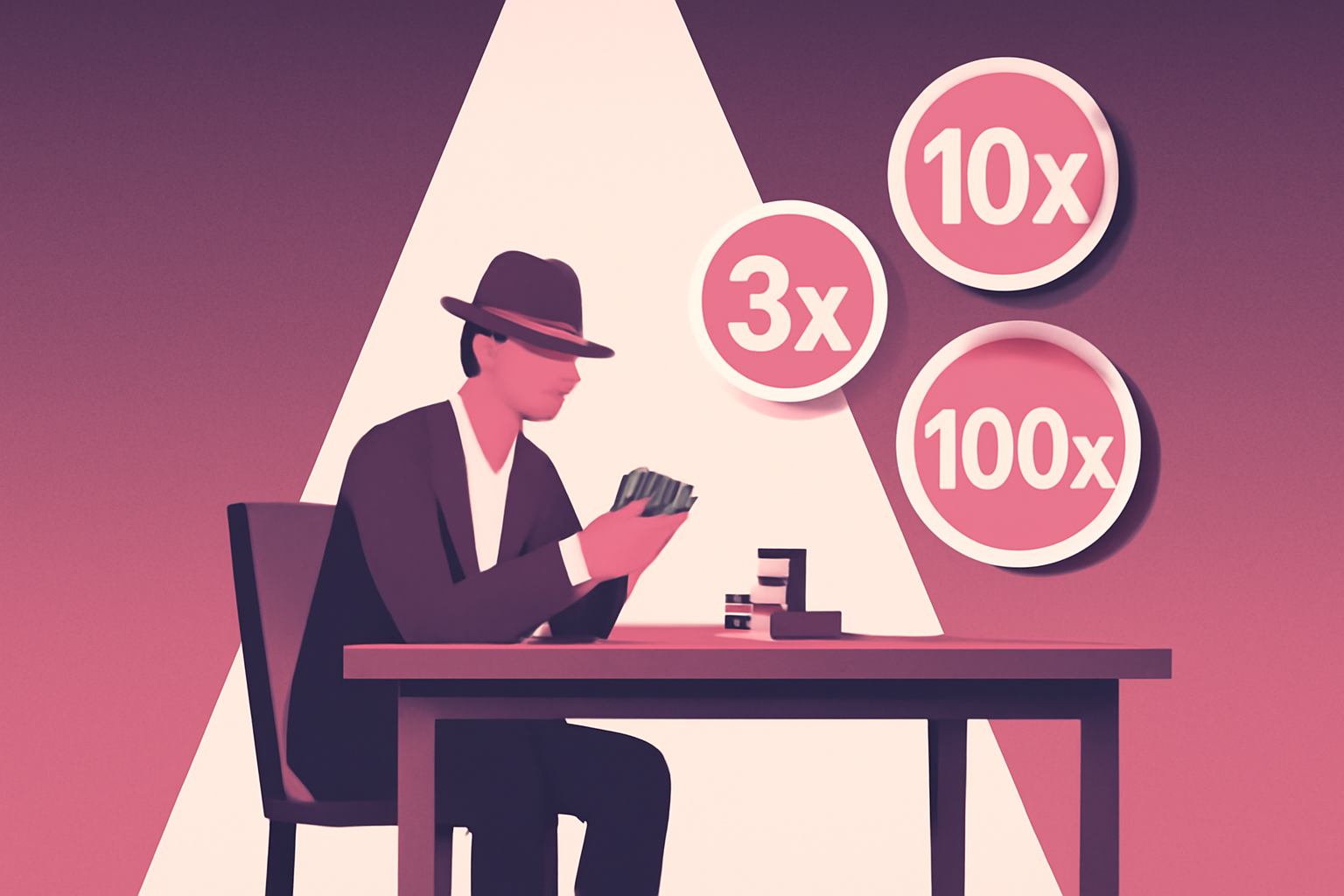
Key features of the format: Stack depth: Both players typically start with 25–50 big blinds (BBs), meaning the game is essentially a short-stack battle from the start. Random multipliers: The prize pool is determined before the game begins, ranging from a standard 2x up to rare jackpots of 500x, 1,000x, or more. Speed: Games last minutes, not hours. Every decision carries outsized weight.
Because of the shallow stacks and the fact that you're facing only one opponent, push/fold strategy becomes the dominant framework. Position rotates every hand, and the player on the button holds the dealer chip and acts last post-flop — a significant advantage.
Mastering push/fold ranges heads-up
At 25 BBs or fewer — which is where most Expresso hands live — the single most important skill is knowing when to go all-in and when to fold. This is called push/fold poker, and mastering it is non-negotiable for consistent Expresso success.
The basics of push/fold
In heads-up play, the small blind is also the button, so they act first pre-flop and last post-flop. This positional advantage means the small blind should be pushing a very wide range when effective stacks are 15 BBs or less.
Here are some concrete examples of push/fold thresholds from the small blind at 15 BBs:
Always push: Any pair, any ace, K-9o+, K-5s+, Q-T+, J-Ts Borderline push: K-2s, Q-8s, J-9s, T-9s — these become profitable pushes due to fold equity Usually fold: 7-2o, 8-3o, 9-2o — the bottom of the range where even fold equity doesn't save you
From the big blind facing a push, you'll call wider than you might expect. At 15 BBs, you're getting roughly 2:1 pot odds, which means hands like A-5o, K-6s, Q-9o, and pocket pairs down to 22 are all profitable calls against a wide-pushing opponent.
Use a GTO (Game Theory Optimal) push/fold chart as your baseline — you can find pre-solved ranges in most modern poker training tools or calculators.
Adjusting your strategy to the multiplier size
Here's where many players leave money on the table: they play every Expresso exactly the same regardless of the multiplier. That's a mistake.
Standard multipliers (2x–5x)
In a 2x game, the prize pool is barely above break-even. Maximizing expected value (EV) through solid, unexploitable play is the goal. Don't take unnecessary risks — just execute your push/fold ranges and keep variance low.
High multipliers (10x–100x)
When the multiplier jumps to 10x or higher, the stakes change psychologically — for both you and your opponent. Many players tighten up dramatically when they see a big number, fearing elimination. Exploit this by ramping up aggression, especially from the button. Steal relentlessly. Push wider. Your opponent folding one extra hand per orbit is pure profit.
Jackpot multipliers (500x+)
These are rare but life-changing. If you're lucky enough to land one, avoid panic. Breathe. Your strategy doesn't fundamentally change — the math still governs your decisions. However, be aware that variance is massive in a single game, so focus entirely on execution. Don't let the prize pool number cloud your judgment.
Exploiting common heads-up Expresso mistakes
Even at stakes where you'd expect solid competition, the heads-up Expresso duel is full of exploitable tendencies. Here are the most common leaks you'll encounter — and how to take advantage.
Mistake 1: Folding too much to button pushes
Many players are uncomfortable calling off their stack without a "real hand." Against these opponents, push every single button at 20 BBs or fewer. You're printing money every time they fold K-Jo or 77 to your 100% push range.
Example hand: You're on the button with 8♠ 5♠ at 18 BBs. This is a standard push. If your opponent folds even 50% of the time, you're immediately profitable — and when called, you still have live cards.
Mistake 2: Limping from the small blind
Some players limp the button trying to "see a cheap flop." At these stack depths, limping is a strategic error — it surrenders initiative and lets the big blind control the pot. When you see an opponent limp, attack aggressively from the big blind by raising 3–4x. They'll often fold or be forced into awkward spots.
Mistake 3: Over-folding on the flop after calling
A player calls your push with A-Ko and the flop comes 7♦ 4♣ 2♠. If they check, they're signaling weakness. In a heads-up scenario where you're still alive and the stacks are deep enough for post-flop play, c-bet aggressively with your entire range on disconnected, low boards.
Building your Expresso edge over time
The heads-up Expresso duel is a high-variance format — you'll run bad, you'll lose flips, and there will be sessions where nothing goes right. The players who profit long-term are those who focus on volume, study, and consistent execution of correct ranges.
A few practical steps to sharpen your edge:
1. Study push/fold charts regularly: Memorize ranges for 10BB, 15BB, and 20BB scenarios from both positions. This single investment pays dividends across thousands of hands. 2. Review your sessions: After playing, identify spots where you deviated from optimal ranges. Were those deviations intentional exploits or just mistakes? 3. Track your results by multiplier: You may find you're profitable in standard multipliers but spilling chips in high-multiplier games due to emotional decision-making. 4. Invest in structured training: Platforms like poker-builder.com offer targeted exercises specifically designed to reinforce short-stack and heads-up skills — exactly what you need for this format.
Conclusion: small game, big opportunity
The heads-up Expresso format might look simple on the surface — two players, short stacks, fast games — but the depth of strategy is real. Master your push/fold ranges, adapt your aggression level to the multiplier size, and relentlessly exploit the tendencies of opponents who play too passively or too emotionally.
Start today: pull up a push/fold chart, play 20 heads-up Expresso games with deliberate focus on one specific leak — button aggression, big blind calling ranges, or post-flop c-betting — and review the results. The jackpot multipliers get the headlines, but your edge over thousands of games is where the real money is made.
Ready to improve your game?
Explore our free training courses and interactive tools to level up your poker skills.
Explore free courses →